Prof. Josep Maria Garrell elected new
President of the European University Association

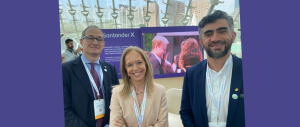
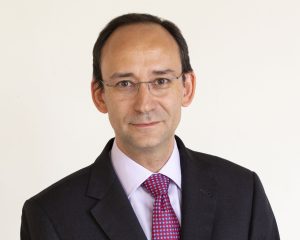
On Thursday, 20 April, 2023, Prof. Josep Maria Garrell, former SACRU President and Universitat Ramon Llull Rector, has been voted as the new President of the European University Association (EUA).

The European University Association (EUA) represents more than 850 universities and national rectors’ conferences in 49 European countries. EUA plays a crucial role in the Bologna Process and in influencing EU policies on higher education, research, and innovation.

Prof. Garrell takes over Michael Murphy and he will serve as EUA President for the term 2023-207. The whole SACRU community would like to congratulate Prof. Garrell on his appointment.


The election of Prof. Josep Maria Garrell,
Gdańsk University of Technology

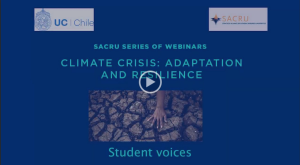
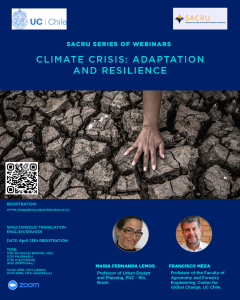
SACRU SERIES OF WEBINARS

Climate crisis: adaptation and resilience


The Sacru Alliance and the Institute for Sustainable Development (UC Chile), invite you to a new webinar that will delve into the climate crisis. For this occasion, the panelists will address the dimensions of adaptation and resilience in the face of the new global scenario.

Academic presentations:

  • Maria Fernanda Lemos, Professor of Urban Design and Planning, PUC Rio, Brazil.
  • Francisco Meza, Professor of the Faculty of Agronomy and Forestry Engineering. Center for Global Change, UC Chile.

Date: April 13th

Time: 11.30 AM (Chile/Boston), 12.30 (Brazil), 17.30 (Italy/Spain), April 14th 00.00 (Japan), April 14th 01.00 (Australia)


Click on the picture or here to register for the event

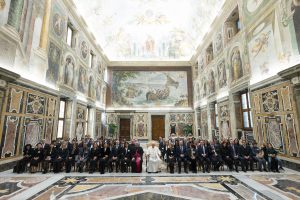
SACRU and Centesimus Annus Pro Pontefice Foundation received in private audience by Pope Francis


On Saturday, March 11, the Holy Father Pope Francis received in private audience participants in the conference “More Women’s Leadership for a Better World. Care as a Driver for our Common Home” in which the namesake research, promoted by the Centesimus Annus Pro Pontifice Foundation and the Strategic Alliance of Catholic Research Universities – was presented.

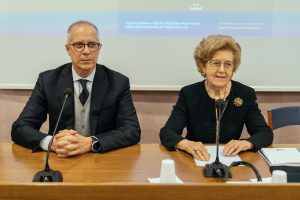
Below are the addresses of greetings addressed to Pope Francis by SACRU Vice President, Prof. Franco Anelli, and the President of the Centesimus Annus Foundation, Prof. Anna Maria Tarantola.

Greeting from Prof. Franco Anelli

Holy Father,

with emotion we bring to your attention the activity of the Strategic Alliance of Catholic Research Universities. Established in 2020, it is a network of eight universities on different continents, from Europe to South and North America, Japan, and Australia, which aims to strengthen the collaboration among Catholic universities in the fulfillment of their mission of constant search for truth and wisdom, and public witness to Christian values.
Universities respond to the call of society: in this sense is oriented the choice, taken jointly with the Centesimus Annus Foundation, to reflect on the theme of the role of women in society by placing at the center of the investigation the special sensitivity of women for the “care” of their neighbors and of the community, their attitude of “taking things to heart,” which translates into an exercise of social roles and functions inspired by a sense of responsibility rather than by ambition for personal affirmation.

We invoke, Holy Father, your benevolent gaze on our work.

Greeting from Prof. Anna Maria Tarantola

Your Holiness,

It is with great gratitude that I address to you on behalf of SACRU and the Centesimus Annus Pro Pontifice Foundation our affectionate greeting and a big thank you for the opportunity of this audience.

Yesterday we presented to a significant, qualified, and attentive audience the volume “More Women’s Leadership for a Better World,” which opens with your valuable preface. For this, too, we extend to you our sincere and affectionate thanks.
The volume contains the results of a joint research conducted by 15 academics from different disciplines from 10 Catholic universities in 8 countries worldwide.

Thus, it is a multicultural and multidisciplinary research that addresses inequality between men and women within the more general theme of fighting inequality that we know is very close to your heart. Inequality is one of the most significant obstacles to the integrally sustainable development and fights against poverty that you advocate, Your Holiness, because inequality undermines economic progress, which in turn exacerbates the social inequalities created by inequality. In particular, persistent inequalities of opportunity and status between men and women are the cause and effect of economic inequality. The ten wealthiest people in the world-all men-own as much as 25 percent of the poorest people, predominantly women.
On many occasions since the beginning of your work, Holy Father, you have reminded us of the need to ensure more justice and equality between men and women and to combat the heinous phenomenon of violence against women that is its consequence. Our research is the beginning of a journey stimulated by Your Magisterium.
Here are some research authors from countries far apart physically, in culture and customs. Yet all of us have worked together in harmony to emphasize the goal of pursuing full equality of opportunity and situation of men and women by emphasizing how only in a spirit of brotherhood and social friendship can we build a new, equitable, inclusive world, and integrally sustainable.

Renewing our thanks, we all look forward to hearing your words, Holy Father, which will be a guide for future research.

The Address of the Holy Father Francis

Dear friends, good day and welcome!

I thank Professors Anna Maria Tarantola and Franco Anelli for their kind words and I greet all of you, members of the Foundation Centesimus Annus Pro Pontifice and the Strategic Alliance of Catholic Research Universities.

Our meeting takes place on the occasion of the presentation of the volume: More Women’s Leadership for a Better World. Care as a Driver for our Common Home. This is a theme quite close to my heart: the importance of care. It was one of the first messages that I wanted to give to the Church from the very start of my pontificate, when I recalled the example of Saint Joseph, the loving protector of the Saviour. [1] The loving protector who cares.

Before turning briefly to certain particular aspects of the work, I would like to emphasize one that is more general. As we have heard, the present volume is the result of a notable variety of contributions, collected and developed through hitherto unprecedented collaboration between a number of Catholic universities worldwide and a Vatican Foundation entirely made up of laypersons. It represents a new and significant process whose rich content derives from the contribution of experiences, competencies, diverse and complementary ways of listening and approaches. It exemplifies a multidisciplinary and multicultural effort with the sharing of different sensibilities: values important not only for a book, but also for a better world.

In light of this, I would like to emphasize three aspects of care as a contribution that women make towards greater inclusivity, greater respect for others and confronting new challenges in a new way.

First, greater inclusivity. The volume discusses the problem of the discrimination often encountered by women, together with other vulnerable groups in society. I have frequently insisted that diversity must never end up in inequality, but in grateful mutual acceptance. True wisdom is multifaceted; it is learned and lived out by journeying together; only thus does it become a “driver” of peace. Your research thus represents a summons, thanks to women and on behalf of women, not to discriminate but to integrate everyone, especially those most vulnerable, at the economic, cultural, racial, and gender levels. No one is to be excluded: this is a sacred principle. Indeed, the plan of God the Creator is an “essentially inclusive” plan, always centred precisely on “those living on the existential peripheries”. [2] A plan that can be compared to a mother, who sees her children as different fingers of her hand: always inclusive.

The second contribution: greater respect for others. Each person must be respected in his or her dignity and fundamental rights: education, employment, freedom of expression, and so forth. This is particularly the case for women, who are more easily subject to violence and abuse. I once listened an expert in history talk about how women came to wear jewelry – women like to wear jewelry, and now men too. There was a civilization where it was the custom that the husband, having many wives, when he arrived home, if did not like one of them, he would say to her: “Go away, get out of here!”; and she had to leave with whatever she was wearing, she could not come back in to take her things: “No, you’re leaving now”. It is for this reason – according to that story – that women began to wear gold, and that was the beginning of the wearing of jewelry. It is a legend, perhaps, but an interesting one. For a long time now, women have been the first material to be discarded. This is terrible. Every person’s rights must be respected.

We cannot be silent before this scourge of our time. Women are used. Yes, here, in the city! They pay you less: well, you are a woman. Then, woe to you if you are pregnant, because if they see you pregnant they won’t give you the job. In fact, if this happens when you are about to start a job, they will send you home. This is one of the techniques they use today in big cities: discarding women, for example, because of their motherhood. It is important to see this reality, it is a plague. Let us make heard the voices of women who are victims of abuse and exploitation, marginalization and undue pressures, like those I mentioned with regard to work. Let us become the voice of their pain, and denounce forcefully the injustices to which they are subjected, often in situations that deprive them of any possibility of defence and redemption. Let us also make space for their activities, which is naturally and potentially sensitive and oriented towards the safeguarding of life in every state, age and condition.

We now come to the third point: confronting new challenges in a new way. Creativity. It is undeniable that women contribute to the common good in their own unique way. We see this already in sacred Scripture, where women frequently play a critical role at decisive moments in salvation history. We think of Sarah, Rebecca, Judith, Susanna and Ruth, culminating with Mary and the women who followed Jesus even to the cross, where – let us not forget – the only man who remained was John, the others all left. Only the courageous ones were there: Women. Then too, in the history of the Church, we can think of women like Catherine of Siena, Josephine Bakhita, Edith Stein, Teresa of Calcutta and also the “women next door”, and we know how they heroically endure difficult marriages, children with problems… This is the heroism of women. Apart from the clichés of a certain genre of hagiography, these were women of impressive determination, courage, fidelity, remarkable for their ability to persevere, even amid suffering, and to communicate joy, integrity, humility and firm resolve.

In Buenos Aires I use to take the bus that went to a northwest sector, where there were many parishes, that bus always passed close to the prison and there was always a line of people who went to visit the prisoners: 90% were women, mothers, mothers who never abandon their children! Mothers. And this is the strength of a woman: silent strength, but long-lasting. Our history abounds with women of this kind, whether famous or anonymous – albeit not to God! – who have inspired and sustained the journey of families, societies and the Church; sometimes with problematic, vicious husbands… the children move on… . We see this even here in the Vatican, where women who work hard, also in roles of great responsibility, are now numerous, thank God. For example, from the moment that a woman became the Deputy Governor, things work better here, much better. And other places, where there are women, Secretaries, the Council for the Economy, for example, there were six cardinals and six laymen, all men. Two years ago, it was renewed, and of the laity one is a man and five are women, and it has started to function, because they have a different capacity: the possibility of acting and also of patience. Once a manager told a story of a worker who became the head of the union and at the time had great authority – he had no father, only a mother, very poor, she did domestic work, they lived in a small house: there was the mother’s bedroom, and then a small room to eat and he slept in that room, he often got drunk at night, he was 22-23 years old – he said that when his mother went out in the morning to work, to clean houses, she stopped, looked at him: he was awake but pretended to be asleep; she would look at him and then go away. “And my mother’s perseverance, of looking at me without reproaching me and tolerating me, changed my heart one day, and so I got where I am”. Only a woman can do this; the father would have kicked him out. We have to look at the way women act: it is a great thing.

We are living in an age of epochal changes, which call for suitable and credible responses. In acknowledging the contributions made by women to these processes, I would like to draw attention to one specific process, namely, the progressive development and use of forms of artificial intelligence and the complex issue it raises about the growth of new and unpredictable dynamics of power. This is largely uncharted territory, and so our forecasts can only be conjectural and approximate. In this area, however, women have much to say. For they are uniquely able, in their way of acting, to synthesize three different languages: the language of the mind, the language of the heart and the language of the hands. But symphonically. A woman, when she is mature, thinks what she feels and does; she feels what she does and thinks; she does what she feels and thinks: it is a harmony. This is the genius of woman; and she teaches men to do it, but it is the woman who comes first to this harmony of expression, of thinking with the three languages. This synthesis is distinctively human, and women incarnate it marvelously, – not exclusively but marvelously and also primarily – better than any machine, for no machine can feel beating within itself the heart of a child in the womb, or collapse, exhausted yet happy, at the bedside of a child, or weep with sadness or happiness in sharing the sorrows and joys of a loved one. The husband works, sleeps and… moves on. It is these things that women do, naturally, uniquely, precisely because of their ability to care. That is why, as the Fathers of the Second Vatican Council wrote, it can be said that: “at this time, when humanity is experiencing such profound changes, women… can greatly assist mankind from degenerating”. [3]

With this conviction, I would like to conclude our meeting by taking up the words of Saint John Paul II in Mulieris Dignitatem: “The Church gives thanks for each and every woman. For mothers, for sisters, for wives; for women consecrated to God in virginity; for women who work professionally, for all women, in all the beauty and richness of their femininity”. [4]

Thank you, dear friends! Please know of my appreciation for this important research and my good wishes for your work. I bless you. And I ask you, please, to pray for me. Thank you.


Women’s leadership as a value and wealth for a better society

Presented in Rome the research “More Women’s Leadership,” promoted by the Centesimus Annus Pro Pontifice Foundation and Strategic Alliance of Catholic Research Universities

March 10, Rome – “This book is about women, their talents, abilities and skills, and the inequalities, violence and prejudices that still characterize the female world. Women’s issues are particularly close to my heart. In many of my speeches I have referred to them, emphasizing how much still remains to be done for the full empowerment of women,” so writes Pope Francis in the preface to the volume “More Women’s Leadership for a Better World” (ed. Vita e Pensiero), containing the research that was presented on Friday, March 10, at the Holy See, promoted by the Centesimus Annus Pro Pontifice Foundation and the Strategic Alliance of Catholic Research Universities (SACRU).

“I am very pleased to kick off this event,” said Prof. Pier Sandro Cocconcelli, “an occasion to present the book that summarizes the results of a significant research work, coordinated by President Tarantola, whom I would like to warmly thank, a book that was honored to receive the Preface of the Holy Father, Pope Francis. SACRU, a strategic alliance of eight universities from five different continents, was established to promote research and university education among the eight partner universities and promote studies with significant impacts on society.

This volume on women’s leadership provides an excellent example of achieving these goals. First, it demonstrates the ability of an international university network’s ability to collaborate among partners and develop partnerships with external stakeholders on sensitive issues, thanks to its strong identity and natural inclination for a multidisciplinary approach and openness to dialogue. Second, this study aligns with Pope Francis’ numerous calls to give women equal dignity in society and the Church itself.”

Our research,” Prof. Anna Maria Tarantola argues, “aims to propose concrete solutions to empower women in all societal contexts and sectors and to use their skills, abilities, and talents. Today’s reality, characterized by conflicts, such as the terrible war in Ukraine, where women are underrepresented at the tables of negotiation, health, climate, and social crises, and by an intense and unpredictable digital evolution, requires new leadership figures with a long-term vision perspective and a special sensitivity to diversity, inclusion, and sustainability. Leaders who must be inspired by cooperative competition. These are characteristics that women have. Their greater involvement in top positions and their voice can facilitate the achievement of the necessary new model of development and the new equitable, inclusive, and fully sustainable world proposed by Pope Francis.”

And it is on what has been done and especially on what remains to be done that all the interventions focused, particularly in the two round tables that animated the meeting: the first, entitled “Topicality of the presence of women in top positions,” moderated by journalist Tonia Cartolano, in dialogue with the co-authors of the research.

The second, titled “Women’s contributions to the solutions of the challenges of the new world,” moderated by journalist Deborah Castellano Lubov who dialogued with Antonella Sciarrone Alibrandi, Undersecretary of the Department of Culture and Education, Elisabetta Olivieri, President of Autostrade per l’Italia, Lella Golfo, President of the Bellisario Foundation, and Elena Beccalli, President of the European Association for Banking and Finance Law and Dean of the Faculty of Banking, Finance, and Insurance at Università Cattolica. SACRU President Zlatko Skrbis made the conclusions of the meeting.

Family Life WG to stimulate exchanges among
faculty members and Ph.D. students

Università Cattolica del Sacro Cuore has activated an exchange with Universitat Ramon Llull. Indeed, the Italian Athenaeum will host Jaume Grané, a Ramon Lllull Ph.D. student, from September to December 2023. The theme of his visiting stay in Milan will concern factors promoting resilience in young couples as a form of violence prevention/protective aspect.

Further collaboration is under development between Università Cattolica del Sacro Cuore and Universidade Católica Portuguesa researcher Susana Costa Ramalho on pro-relational processes and generativity in the family and couple.


Ethics as a compass:
reflections for the Safer Internet Day


 In light of the Safer Internet Day, launched by the European Commission in 2004, experts from the Strategic Alliance of Catholic Research Universities have analyzed the ethical implications of digital technologies

In 2004, the European Commission launched Safer Internet Day to promote positive and responsible internet use, especially among young people. This initiative broadened its scope involving more than 150 countries and raising awareness of the challenges and opportunities presented by emerging digital technologies. Recently, as the Covid-19 pandemic contributed to a faster spread of technology by moving a range of experiences from face-to-face to the digital world, the debate around the need for a humane dimension of technology has grown.

Inspired by its mission of global cooperation for the Common Good, the Strategic Alliance of Catholic Research Universities (SACRU) has collected insights from its experts on the ethical questions posed by digital technologies from a multidisciplinary perspective. SACRU is a network composed of eight Catholic Universities from four different continents. The contributions represent the personal views of individual academics and are not intended as the official positions of SACRU and its partner Universities.

Contributions by experts – SACRU Universities

Università Cattolica del Sacro Cuore (Italy)

Written by Giuseppe Riva, Director of Humane Technology Lab, and Ciro De Florio, Associate Professor of Logic and Philosophy

Ethics as a compass

Every technology reshapes the world. For this reason, technology is rarely value-neutral: it affects reality, and moral relevance accompanies every causal action. And there is no doubt that, for the past twenty years or so, the agenda of technology ethicists has been dominated by two words: Artificial intelligence (AI). AI is generally associated with two powerful narratives that sometimes have polarizing aspects. On the one hand, AI is understood as the triumph of human reason, the creation of what sets us apart from the rest of the natural world. However, there is another, a more human-centric, narrative that questions the impact of this technology on the various dimensions of our experience: from work to interpersonal relationships. These two narratives are independent and return different images of the digital revolution. However, the reunification of these perspectives seems essential to governing this phenomenon. The goal is not easy because AI acts with a degree of autonomy and independence never before observed, bringing out a new category of actors: “artificial agents.”

The other major ethical research pillar in AI is algorithms’ transparency. The more intelligent, autonomous, adaptive software is, the more difficult it becomes to understand “from the outside” the mechanisms by which information is analyzed. The media reflection on the importance of ethics in AI concerns, in large part, the normative relevance of software systems and information management: selecting a candidate based on a prediction about his or her productivity or diagnosing a certain disease are actions that involve information processing. However, AI systems can do much more than that; they can act concretely in our world, harming or saving lives, relieving from physical fatigue, or relegating humans to spectators.

The union of robotics with AI opens up largely unexplored fields whose ethical, economic, political, and social consequences could be disruptive. Interaction with robots introduces a set of problems that software does not: a robot’s agency and a human’s agency toward a robot are inescapably mediated by physical interaction. But not all robots, that is, not all technological devices with AI systems, resemble humans. There are (semi-)automatic machines on the horizon whose operation is already under the lens of AI ethicists. Think, as examples, of self-driving cars and automatic weapons; again, what is relevant for ethical consideration are different (new?) concepts of agency, control, and autonomy. What the digital revolution and the advent of AI need are not narratives but rational looks at the world based on a “human,” integrated, multidisciplinary approach that combines knowledge of technical aspects with that of the processes and contexts in which AI and robotics will be used. Unfortunately, without this double perspective, the risk of losing the ethical challenge is very high.

 Written by Giovanna Mascheroni, Associate Professor of Sociology of Media and Communication

Children and AI

AI is embedded in many platforms, services and objects we, including children, use on a daily basis- at home, at school, in the workplace, on the move. And, yet, the role of AI in children’s lives- let alone its problematic consequences for children’s futures- remains almost invisible in the public debate, hidden behind the industry hype and the powerful discourse of techno- or data-solutionism. Contrary to this rhetoric, however, AI systems are not artificial: rather, they are heavily dependent on data extraction and processing, algorithmic automation, and the legitimation of data as accurate, objective, and impartial representations of reality. In other words, AI does not only require the extraction of natural resources, huge amounts of computational power and energy, or the exploitation of human labour – as the recent case of Open AI using underpaid Kenyan workers reminds us: AI is premised upon our submission to datafication, to turning our lives into profitable resources for surveillance capitalism.

Children’s everyday lives—their contexts, practices, and emotions- are not exempt. From the recommendation systems of YouTube, streaming or gaming platforms; to the voice-based agents embedded in domestic smart speakers; to algorithms running on educational platforms or health apps, children’s lives are routinely dependent on data, systematically turned into digital data, and increasingly governed by algorithmic classification and automated processes. The risks involve more than facing data breaches and privacy violations. In 2020, when the A-level grades were decided by a controversial algorithm in place of the usual exams, thousands of British students were downgraded and risked their admission to university. As this example shows, data-driven includes biases as much as human judgment: whether it originates in the historical data used to train machine learning, or in the (often manual) classification of data, or even in the design and programming of the algorithm itself, algorithmic bias results in systematic discrimination and “allocative” and “representational harms”.

Respectively, the unequal access to resources (education, health, credit, job opportunities, etc.) based on presumably “impartial” algorithmic classifications, and the influence of stereotyped classifications on a child’s self-representation, their understanding of the social world and, ultimately, their agency to encompass the longer-term harms that AI, if unregulated, may pose to children. In order to repurpose AI for a better future, policy interventions should move beyond privacy to encompass questions of equity, transparency, and sustainability. Beyond data protection regulation and to avoid longer-term harms, children, their parents, and educators should be given a voice in the automated decisions made for them by AI systems.

Universitat Ramon Llull (Spain)

Written by Xavier Vilasís, Full Professor at La Salle-URL Engineering Department

 The key for artificial intelligence governance

Artificial Intelligence is polarising. Some consider it a humankind major threat, while others see it solving people’s main challenges. Some just look at the money-making opportunities it provides. In any case, the discussion is rarely set on sound technical grounds but rather on the powerful storytelling invoked by the attribution of human features to algorithms.

Yet facts are that large amounts of personal and context data are available, and more shall be in the future, while computer capacity has dramatically increased. This has enabled the development of complex algorithms, performing accurate profiling of citizens, detecting their presence, or generating coherent text.

None of these activities is new, but our dependence on the digital world and the scale at which those analyses can be performed could potentially exploit our psychological weaknesses. Once again, in technological development, it is not technology to blame but its use. And again, three major players are required to ensure the best potential use of these new advancements. First, algorithm designers and users, who must do their best to keep the ethical and moral principles of their use. Second, individuals who must exert critical thinking on what is being proposed. And third, regulators, who must enforce laws making sure ethical and moral guidelines shall be followed.

What makes Artificial Intelligence different from other technological advances is its direct global social reach, combined with its technical complexity. Education becomes key to provide all players the ability to perform critical thinking, the proper guidelines to set ethical and moral principles and finally, of course, the knowledge to grasp the reach of the technology. These requirements imply the need for a comprehensive span of education both at first, secondary, and tertiary levels, breaking set divisions between STEAM and other disciplines.

Pontificia Universidad Católica de Chile (Chile)

Written by Gabriela Arriagada, Assistant Professor of AI & Data Ethics

 We cannot develop good human-centred AI without teaching applied ethics

The discipline of human-centred AI (HCAI) focuses on aiding humans instead of replacing them, thus extending human abilities and capabilities to develop technified societies by designing new interactions between humans and AI. Most recently, two major events have incorporated this sub-discipline into their agenda. NeurIPS, in 2021, analysed the use of machine learning algorithms in healthcare, education, and government, through the understanding of technical requirements, design approaches, efficacy metrics and societal impact for HCAI systems. IBM, in 2022, organized a conference on intelligent user interfaces, with cutting-edge innovations for human-computer interaction based on generative AI research (generating new images, text, code, video, and audio), including areas such as co-creative systems and explainability.

Despite the exponential advancement in research initiatives in the public and private sectors, a critical role in the development of HCAI has been consistently overlooked. One of HCAI’s goals is facilitating shared objectives between the optimization goals of an AI and human decision-making. To advance in this goal, however, it is essential to consider and integrate the contextual needs of different affected social groups into AI’s design and development methodologies. This contextualization implies analyzing background information beyond the collected data points, which amounts to societal conditions affecting individuals the AI is programmed to aid. Incorporating systematic ethical scrutiny, for example, can help prevent solutionism traps from blinding against alternative solutions to a socio-technical problem, which may not require using AI as the default. After all, technical feasibility does not amount to moral desirability.

Thus, developing AI technologies to serve people requires an interdisciplinary perspective rooted in the moral questioning of real-life AI applications that fosters trust whilst respecting people’s dignity. Teaching these methodological tools for moral deliberation is still underdeveloped. Many undergraduate and graduate courses keep ethics as a foreign aspect of their curriculum. We are educating highly trained developers and overlooking their role as professionals and citizens capable of critically engaging with concerns about fairness, equality, discrimination, transparency, and responsibility in AI.

A central dimension of an applied ethical approach to AI’s development implies meaningful human control over the AI. The interpretation, understanding, and implementation of the technology’s limitations depend on human decision-making, which is necessarily context-dependent. Accordingly, to continue this integration of human-centred AI into society, we cannot move forward without educating future developers to think and deliberate about the ethics of AI, not as an added feature but as a foundational element.

Universidade Católica Portuguesa (Portugal)

 Written by Paulo Cardoso, Professor at Católica Lisbon School of Business and Economics and expert in digital innovation

 How safe is the Internet?

The Internet has been around for more than 50 years already. Still, it only conquered the world after the World Wide Web advent, starting in the mid-90s. In those old days, many of us believed that the freedom of communication would naturally foster the freedom of speech, allowing participants to access as much information and knowledge as they wanted and possibly could. We sincerely believed we were building a better world.

For example, back in 1991, many of us used the communication tools already present on the Internet to spread out the word about what happened in the Santa Cruz Massacre in Indonesia, pushing for freedom in a movement that eventually led to the creation of Timor-Leste.

In Europe, the Internet was forbidden in most countries until 1994. At the time, adopting a USA-based protocol developed by the military, and supported by technologies and companies on the other side of the Atlantic, was utterly inconceivable. For those like us using the Internet against the law in Europe, the world of free communication seemed scattered for good. And then, in October 1994, a surprisingly magical event happened when the G7 committed towards adopting a standard protocol to be the bedrock for a worldwide and free communication platform among all. By chance, the Web was just born at the time, and all crucial elements lined up to spread the adoption of what is today the wonderful and previously imaginable common communication space for most.

Reduced asymmetries of information & knowledge seemed to push the world towards safety and prosperity. It looked like everybody connected could access the truth, no matter what. Still, we have been witnessing troublesome examples like the rise of negationists and the US Capitol attack on the 5th of January 2021, where thousands of people shared death wishes against freedom’s representatives in the USA, all in the name of freedom itself. And it turns out that most people with dark beliefs originate in the same Internet. How was this possible? Why are individuals using their freedom to opt for the dark side? How often do we stumble on misinformation, or even disinformation, within messages coming from those we trust and with whom we share the same values, only to find they were simply misled? Consequently, the Internet became unsafe because it can contribute to strengthening the darkest forces on earth. How can we fight for a safer internet?

The ongoing discussion on how to influence or control Big Tech’s platforms for supervising their own content is as tricky as dangerous. So, the other option is strengthening recipients’ enlightenment, with space for rightfully judging the good from the bad. A major contribution in this sense comes from handling biases, where education can be pivotal to preparing individuals for the communication jungle that the Internet has evolved into. Biases are unconscious and can be rewarding because individuals are addictively joyful when believing to be right. So, how can we help individuals’ cognitive efforts to recognize their biases and mitigate the corresponding consequences through self-awareness?

Program

Presentation of the joint research

More Women’s Leadership for a Better World:
Care as a Driver for our Common Home

 With the preface by the Holy Father Pope Francis


Friday 10th March 2023

14:30-18:30 | Istituto Maria Bambina, Vatican City

14.30 – 14.40

OPENING REMARKS

Pier Sandro Cocconcelli, Secretary-General, SACRU

14.40 – 14.50

PRESENTATION OF THE RESEARCH

Anna Maria Tarantola, President, Centesimus Annus Pro Pontifice Foundation, coordinator of the Research

14.50 – 16.10

Round Table

TOPICALITY OF THE PRESENCE OF WOMEN IN TOP POSITIONS

Dialogue with the co-authors of the research

Chair: Tonia Cartolano, journalist, Sky TG24

16.10 – 16.30 Coffee break

16.30 – 17.30

Round Table

WOMEN’S CONTRIBUTION TO THE SOLUTIONS OF THE CHALLENGES OF THE NEW WORLD

Maria Helena Semedo, Deputy Director-General, FAO

Antonella Sciarrone Alibrandi, Undersecretary, Dicastery for Culture and Education

Elisabetta Oliveri, President, Autostrade

Lella Golfo, President, Fondazione Bellisario

Elena Beccalli, President, European Society for Banking and Financial Law (Italy)

Chair: Deborah Castellano Lubov – journalist, ‘Vatican News – Vatican Radio

17.30 – 18.00

Discussion

18.00 – 18.15

CONCLUSIONS

Zlatko Skrbis, President, SACRU

18.30

Cocktail


A private audience with the Holy Father Pope Francis will be held on Saturday 11th March at 11 a.m.


More info at: sacru.alliance@unicatt.it

“The University saved my life”: SACRU solidarity in action

Ahead of the United Nations Human Solidarity Day and the approach of Christmas, SACRU Universities describe their plans to leave no one behind

Cooperation projects in Africa, more than 1,000 young people who spend their time building houses and chapels in Chile, direct welcome of young people fleeing the war. These are just some of the projects launched in recent years by the partner universities of the Strategic Alliance of Catholic Research Universities (SACRU). The International Day of Human Solidarity on Tuesday, Dec. 20, is an opportunity to recount and share social and solidarity initiatives organized by the eight partner universities in different parts of the world. These projects originate in different contexts but share the same goal: to leave no one behind. Solidarity is often used only in the abstract to describe support for the most vulnerable. With increasing social and economic inequalities, numerous humanitarian crises and conflicts, and climate emergencies, it is necessary to move from words to deeds to help those in need concretely.

Contributions by SACRU Universities

Università Cattolica del Sacro Cuore (Italy)

Improvement strategies for the prevention
and clinical management of HIV, TB and malaria

Università Cattolica del Sacro Cuore, through its Centre for International Solidarity, participates as a lead partner in the international cooperation intervention The Community Outreach as a model to serve the women of the slum in the urban area of Kampala. Improvement strategies for the prevention and clinical management of HIV, TB and malaria, funded by the Italian Agency for International Development Cooperation (AICS) via The Global Fund. Project partners are Fondazione Italia Uganda Onlus and the Benedict Medical Center, a small health centre near Kampala, Uganda.


The project, started in January 2021 after some suspensions due to the outbreak of the Covid 19 pandemic, aims to contribute to the fight against the spread of sexually transmitted diseases, TB and malaria, in Uganda, through the promotion of Community Outreaches and, in particular, of pathways for the prevention and treatment of sexually transmitted diseases in women in the project’s target communities. Four community outreaches were promoted as part of the project, involving the Kireka and Kisenyi communities in Kampala. Through Community Outreach, the project promotes an agile, innovative model that is fully in line with the social, economic and health conditions of the beneficiary communities, thus providing a contribution, albeit on a small scale, to the fight against the spread of sexually transmitted diseases, TB and Malaria in Uganda, while maintaining a firm focus on the need to promote both treatment and prevention of the diseases covered by the project.


Each CO is organised as follows:

  • Recruitment phase: after registration by the health workers, a questionnaire is administered to the participants to test their awareness of their health status and level of knowledge on the topic of sexually transmitted diseases, HIV, TB and malaria;
  • Training: during the CO, health workers organise some training sessions on sexually transmitted diseases, HIV, TB and malaria, during which they inform participants about the main symptoms associated with the diseases as well as the most commonly associated risk factors and illustrate the behaviour to adopt in order to prevent infections and possible treatment paths; during the day, an ad hoc training session is also organised for participating women, who are encouraged to invite other women who may be in particularly risky situations;
  • Diagnostic tests: following the training sessions, the following diagnostic tests will be administered to participants. Some tests will be carried out directly on the CO’s site and the results will be available at the time; others will be carried out at the Benedict Medical Centre and the results will be available within a week.

Thanks to this project, more than 2,000 people benefited from graded screening during community outreach, and of these more than 1,200 were pregnant women.

Universidade Católica Portuguesa (Portugal)

Written by Inês Espada Vieira, Professor of Culture Studies

Universidade Católica Portuguesa saved me from darkness

“Universidade Católica Portuguesa saved me from darkness.” These are the words of Ouwais S., a student of Communication Studies. He wrote them in July 2022, in a non-academic context, after explaining how he felt in 2019, when he arrived in Portugal from Syria: “Could you imagine suddenly finding yourself in a dark tunnel, not knowing where it ends and what you will have to face as you walk through it; forced to walk against your will; you cannot turn back or even stop to look around or give yourself a chance to think? That was my situation when I was in my country, devastated by war.”

Joining the Portuguese national effort in welcoming and integrating refugees, in the week of the International Refugee Day of 2022, Universidade Católica Portuguesa (UCP) opened special applications with tuition waivers: a total of 24 vacancies in 17 B.A. programs in Lisbon, Braga, Porto and Viseu. There are currently 13 refugee students at Católica, comprising six different nationalities. Of these refugees, nine are women, eight are displaced from the war in Ukraine, and two are first-time university students.  UCP welcomed these students, committed to the Sustainable Development Goals and as part of the global effort of 15 by 30, presented by UNHCR, so that by 2030 15% of refugees, that is 500 000 men and women, can be studying in higher education.

Being a university student is not just about academic opportunity. It is also to rediscover one’s vital identity and go beyond the refugee condition. It is about having the opportunity to invest time and dedication into something that, while not immediately important in a present emergency adaptation, is essential for a fulfilling future and integration. We are aware of the difficulties; we accompany our students in their struggles and accomplishments, respecting hesitations and decisions. Promoting and integrating refugee students (cf. Pope Francis message for the 104th World Day of Migrants and Refugees, 2018) is a long-term commitment for a university fully aware that education can indeed save people from darkness.

Pontificia Universidad Católica de Chile (Chile)

 Written by Benjamin Cruz, Director of the Pastoral Ministry

Christian solidarity projects of UC Chile will mobilize more than 1,000 young people

Concern for those most in need is at the heart of UC Chile, which is why the university has several solidarity projects and programs that seek to be a contribution to society, either through learning and service courses, as well as projects organized and coordinated by students, such as those of the Pastoral UC that we present below.

Country Mission (Misión País), Country Chapel (Capilla País), Sowing and Housing (Siembra y Viviendas) are projects of the Pastoral of the Pontificia Universidad Católica de Chile (UC Chile), whose volunteers will be between January 4 and 14 building chapels and homes, in addition to accompanying people delivering Christ’s message of hope, in 46 locations in 9 regions of Chile, with the youthful energy that characterizes them. On Wednesday, January 4, 1,150 young people will gather in the church of the San Joaquin Campus of UC Chile so that Monsignor Celestino Aós, UC Chile Grand Chancellor and Archbishop of Santiago, will send them on their mission in the Mass of departure. Then, in communities, they will board the buses that will take them to the localities where they will carry out their mission. The missions will last until January 14, when, in addition to the construction, volunteers will carry out activities with the neighbors of different communities and reflective meetings about the contingency and their role as Catholics in society.

A brief history of these initiatives:

Country Mission (Misión País) is a student project that since 2004 has taken more than 30,000 young missionaries to nearly 500 areas from the city of Arica in Northern Chile to Punta Arenas in the south.

Country Chape (Capilla País) was born as an initiative that sought to build new temples for the visit of Pope Francis to Chile. Since its creation in 2015 they have built 101 chapels in the country.

Sowing UC Chile (Siembra UC) is a missionary project where university students lead groups of schoolchildren, generating spaces for formation and vocational exchange, in addition to bringing the word of Christ with the vitality that characterizes them.

After a great work with the families, for the first time “Viviendas” (Housing) will build 7 homes in the communes of Batuco and Lampa, responding to the housing deficit crisis Chile is going through.

Young exchange students or foreigners who want to participate in these projects are always very welcome, which has been seen in the participation of students from different parts of the world. In case other young people from universities outside Chile want to participate, they can register at: https://acutis.uc.cl/

Pontificia Universidade Càtolica do Rio de Janeiro (Brazil)

 Solidarity initiatives

Scholarships for low-income students

PUC-Rio, a philanthropic and community university, is committed to offering scholarships for higher education for low-income students. In 2022, promoting a more inclusive institutional policy aligned with the University’s Identity and Mission has benefit 4805 (~50%) undergraduate students. Besides this, PUC-Rio offered 2072 (~90%) scholarships for graduate students.

Cooperation and Development Projects

PUC-Rio has 117 projects with more than 786 professors and staff directly involved within Cooperation and Development Perspective.

Volunteering initiatives, and charity programs in developing countries

PUC-Rio has more than 139 initiatives, with more than 200 professors and staff directly involved in volunteering initiatives and charity programs in developing countries.

Social entrepreneurship & start-up

The Social and Environmental Impact Entrepreneurship Program 2.0 aims to train and develop entrepreneurs, projects, and businesses that seek to solve a social or environmental problem related to the 17 ODS. In the 2022 edition, it supported 20 socio-environmental projects. The Ideiaz initiative aims to support innovative ideas with socio-environmental impact. Those projects will become startups, generating jobs, innovative products, and services. In 2022, it supported eight ventures from all regions of Brazil.

The Impact Germination Program is a cooperation agreement aiming to foster education programs online and free to support socio-environmental impact businesses. The selection of businesses will highlight eight projects/businesses to be pre-incubated by Genesis PUC-Rio over six months. This project aims to foster the region of Angra dos Reis, contributing to the conservation of flora, fauna, and Brazilian diversity and services ecosystems. Developing Rocinha’s Social Impact Incubator – JUMP aims to support initiatives with a socio-environmental impact, whose purpose is to generate jobs and income to reduce violence and encourage the production of technology in the territory of Rocinha slum.

Universitat Ramon Llull (Spain)

 Written by Isabel Vergara, Communication director of the Pere Tarrés Foundation

Charity projects for children and young people in vulnerable situations

Education in free time is a very valuable educational time, a unique experience that
 contributes to the growth of children and young people throughout people’s lives. Leisure-based education is one of the rights outlined in the Declaration of the Rights of the Child. Unfortunately, not all the children in Spain can exercise this right. Currently, 30% of children in Spain live below the poverty line, and leisure time is often when social exclusion is starkly highlighted.

The impact of educational activities in free time is even more positive and necessary for children in vulnerable situations. Children relate to one another and learn through play. It is their language, their way of discovering the world, and, therefore, an essential way of acquiring new knowledge, socializing, growing, and developing in the best possible way. For this reason, at the Pere Tarrés Foundation, we carry out projects so that children from families without resources can take part in activities that provide education through leisure and give them the same opportunity as other children to enjoy a full life. The Pere Tarrés Foundation is one of the Faculties that is part of Ramon Llull University, where it offers two degrees in Social Education and Social Work.

The Pere Tarrés Foundation’s solidarity projects are intended to ensure that more than 12,000 children and young people from Spain who live at risk of poverty have the chance to take part in leisure activities all year round and, at the same time, improve their physical and emotional well-being. The solidarity of companies and individuals helps us make this possible. The social workers and volunteers work every day so that all children, regardless of their origin and social condition, can develop humanly, spiritually, emotionally, and competently so that, in the future, they can enjoy a full life.  We help families in vulnerable situations with weak family networks or none so they feel supported in bringing up their children. The aim is to get them away from the anxiety of their everyday situations and destructured environments.

The right to play is also part of this accompaniment that we carry out. And now that the Christmas dates are approaching, we are launching a solidarity campaign to collect toys and school supplies, in which the Ramon Llull University faculties are also participating so that all children can enjoy the excitement of Christmas.

 Boston College’s Summer Visiting Doctoral Research Fellowship

The summer research fellowships will support graduate students matriculated at a partnering university (e.g., from SACRU partners, Ateneo de Manila University, Pontificia Universidad Católica Javeriana, Université St-Joseph de Beyrouth, etc.) who are seeking to undertake 2 months of research at Boston College

2023 Applicants:

Start Date: June 11, 2023

Time Period: June 11- August 11

Benefits:
•Round-trip, economy-class airfare to Boston
•Housing, provided through University services
•A modest living stipend, to cover living expenses (including fellow’s purchase of health insurance)
•Library privileges
•University internet access

Application Details: The applicant should submit a cover letter and CV. The cover letter should include a description of the intended research project (not to exceed two pages in length), including how the applicant’s time spent at Boston College would contribute to the overall success of the project. Apply here

Deadline: January 20, 2023

Requirements: The fellow must have a major research project. The fellow has the option to deliver one public lecture during their stay.

Sponsor: The Office of Global Engagement

 SACRU and CAPPF published the volume
“More Women’s Leadership”

The book has a Preface by the Holy Father Pope Francis
and is edited by Prof. Anna Maria Tarantola 

The Strategic Alliance of Catholic Research Universities (SACRU) and the Centesimus Annus Pro Pontifice Foundation (CAPPF) released the volume “More Women’s Leadership for a Better World: Care as Driver for our Common Home.” The book has a Preface by the Holy Father Pope Francis and is edited by the President of CAPPF, Prof. Anna Maria Tarantola. It was published by the publishing house Vita e Pensiero in English, Italian, and Spanish, both as an e-book and physically.

Using a multidisciplinary and international perspective, the research involved fifteen academics from ten Universities in eight countries: Italy, Japan, Spain, Portugal, USA, Chile, Brazil, and Australia. Several aspects of overcoming inequalities are considered, along with the causes and evidence of persistent inequalities, the obstacles for women in the world of academia, enterprise and politics, and the positive effects of the presence of women in top positions. The key driver of the research is the consideration of care as the compass for changing thought and action. In the research, “care” is the mutual care among “brothers” and “sisters” in the human family, as emphasized in the encyclical of Pope Francis, Fratelli Tutti.

Download the e-book here: More Women’s Leadership for A Better World